- gelato - ciao ciao's and cafe roma gelato in tank hill
- banana split - crocodile cafe in kisementi
- mango sticky rice - krua thai in kololo
- sweet plantains - mama ashanti's bombo road
- chocolate cake - i love new york kitchen garden city
- corn pudding - lotus mexicana nakasero
- chocolate mousse - la patisserie ggaba road
- snickers ice cream bar - nakumatt oasis mall
- banana milk shake - kabira country club bukoto
- baklava - lebanese store in basement of garden city
Wednesday, June 03, 2009
ugandlisht 3 - sweet cravings in kla
When you're fiending for sugar in Kampala - here's the low down on where to satisfy your sweet tooth needs.

Wednesday, May 27, 2009
ugandlisht 2 - three great places to have a drink in kla
 for the context
Lalibela - Kabalagala - directly above Fancy This lingerie shop, Lalibela is a little slice of Ethiopia tucked away in Kampala's rowdiest neighborhood. Hang out on their balcony - a church pew width overhang that gives you the perfect leverage to people watch and sip on a club. Background music shifts between Ethiopian beats and 90s movie soundtracks. Stick around for dinner too - no menu, but whatever they're serving promises to be delicious.
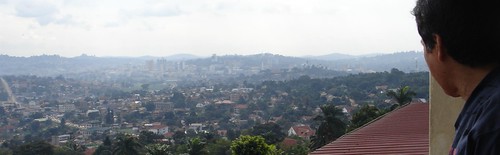 for the view
Hotel Diplomate - Muyenga - a dusty bit of the old Africa, complete with a stuffed lion chained to the staircase. the hotel feels pretty vacant, which only adds to the romance of the sunset over Kampala. Add a g&t and watch the jam build up on Ggaba road as the clouds and sky turns all shades of magic.
 for the atmosphere
Emin Pasha - Nakasero - this hotel is simply gorgeous - the most well-sited and tastefully-designed piece of architecture I've seen in Kampala to date. Build into the hill-side in Nakasero, Emin Pasha has infinite options for seating experiences - on the patio, in the cozy bar, in the garden, next to the fire pit. Pick one and settle in with a glass of house red. Perfect opportunity to put on your best fancy lounge-y clothes and feel utterly luxurious.
Wednesday, May 20, 2009
ugandlisht 1 - what to do in gulu
A new feature! Each Wednesday I'll be adding a list to this blog, related to all the Uganda PR I tend to naturally do. Ugandlisht (a combo of the peculiar dialect of English spoken here + list) will pull together all things strange, interesting and useful about living and working in Uganda.
 View of Owino Market from the balcony of Jojo's Palace
Ugandlisht 1: For some reason, you find yourself in Gulu. What to do?
 View of Owino Market from the balcony of Jojo's Palace
- Stay at Jojo's Palace. Book with Denis at +256 (0) 782925004, single self-contained at ush 35,000, breakfast of hard-boiled egg, pineapple, banana, bread, jam, coffee and tea included.
- Bring mosquito repellant, take your anti-malarials, and sleep under the net. Gulu is not Kampala. They are vicious little suckers up there. A little Deet goes a long way.
- Say "acho maber" (good morning in Acholi) to Mama Lucy at One Mango Tree - enter Owino Market right across from Jojo's Palace, and you'll find One Mango Tree about a 30-second walk down, on the left. The tailors make lots of One Mango Tree designs to sell at a discount to locals, so stock up!
- Check out the rest of Owino, particularly the food section. You'll find stalls with some traditional products too - like metal ankle bells used for Acholi dance, and carved out gourds used for carrying water and food, as well the local clay bowls, which are a pretty shade of deep red.
- Get yourself some African shirts or dresses from the tailors in Owino. Pick out crazy African fabric (roller skates? chickens?) and play fashion designer. Eat lunch while you're there. A delicious plate of rice and beans is only ush 1,500, or try some malakwang, bo, cassava, or odii.
- Eat some paneer (the tikka masala is delicious) and naan at Obama Inn (ask any boda driver to find the place, right in town)
- Treat yourself to a massage at Bomah - ask for Judy (a delightful Kenyan therapist) and enjoy the rubdown and, even better, the after-massage scrub with a hot wash cloth - only ush 20,000. If you're feeling really adventurous, join the big men of Gulu for a steam bath and talk shop. And afterwards...
- Have a feast in their restaurant. Introduce yourself to Jacob, the manager, and bring your own avocado for the chef to slice and add to your greek salad. If cheese is there, the macaroni au gratin will satisfy your garlic craving and fill an empty belly. Steak with pepper sauce is pretty good too.
- Pick up some handicrafts at Wawoto Kacel - a little craft shop across from Pearl Afrique Hotel in town. Gorgeous natural jewelry, banana leaf cards, tie-and-dye and creative bark cloth products made by Comboni Samaritans - a coop supporting HIV+, widows, orphans and the disabled. Schedule a visit to Comboni with Godfrey, who works at Wawoto Kacel. It's about a 10-minute boda ride outside of town, but their operations are truly worth a visit.
- Stop by any of the many bicycle vendors in town. Talk them into letting you rent a bike for the day and take a ride around the outskirts of Gulu - head for the Cathedral to check out Gulu's architectural marvel and a nice big statue of Jesus.
- Take a late afternoon beer at Havana or Da Pub, or head there after hours to get a taste of the Gulu night scene.
- Have dessert. At Bomah, bring your own mango to add to the pancake and drizzle it with honey. Perfect washed down with spiced African tea. At Bambu, it's the Sweet Temptation. Indulgent; if you're lucky and they have all the ingredients in stock.
- Before you head out of town, stop by Country Bakery for provisions - chicken and veg samosas are excellent, as is the banana bread; and pick up a bag of vanilla yogurt (bite the corner, insert straw - instant smoothie) is great for a hot day in Gulu.
- If you're taking the bus back to K'la, try for the first Northern Tours bus (leaves around 6:45). It takes only 4 hours to reach the outskirts of K'la from there. Keep your luggage on the bus with you and when you get to Kawempe, tell the conductor to let you off and hop a boda. It will save you up to two hours of sitting in traffic and the hassle of the bus park.
Friday, May 15, 2009
entrepreneurial explosion
Turns out I'm an entrepreneur. One of the side effects of living and working in Uganda - opportunity abounds. One Mango Tree continues to grow - adding products and continually widening our customer base, delving into organic cotton and other craft - screen-printing, seed jewelry, etc.
I'm not sure if it's Uganda or it's my changed modus operandi - but all of the businesses I've dreamed of in the past somehow seem much more realistic.
Like...
The eco-B&B somewhere breathtakingly beautiful with a yoga deck.
The yoga studio cafe with a fair trade shop.
The smoothie/juice/coffee shop with wifi.
 sipi river lodge at night photo credits joe shymanski
It's a compilation of all of the things that I love. I don't just want to do yoga - I want to design and market organic cotton yoga clothes. I want to organize retreat weekends bringing together Ugandan massage therapists and yoga teachers with beautiful spots like Sipi River Lodge and Rainforest Lodge. The colors, the smell, the taste, the sounds. Right now it all just keeps me energetic and inspired, but at some point I know I'm going to find a spot and put down some roots - build an experience for people to enjoy.
Sometimes I wonder if I've totally lost it. Or found it?
I'm not sure if it's Uganda or it's my changed modus operandi - but all of the businesses I've dreamed of in the past somehow seem much more realistic.
Like...
The eco-B&B somewhere breathtakingly beautiful with a yoga deck.
The yoga studio cafe with a fair trade shop.
The smoothie/juice/coffee shop with wifi.
 sipi river lodge at night photo credits joe shymanski
----
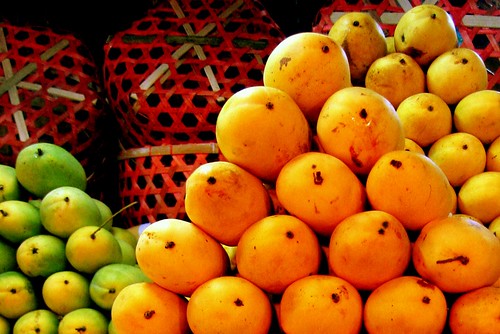 let's dry these suckers!
And then there's food processing. This week, while working in Gulu on a consulting assignment, I was talking with a colleague about how to dry fruits (merely out of curiosity - brought on by the mounds of mangoes to be found all over northern Uganda right now). After hearing how she dried fruits in Peace Corps in Benin, my mind went crazy over the idea of artisan-dried fruits to market and sell within East Africa and possibly abroad! One Mango Tree dried fruits!let's dry these suckers!Sometimes I wonder if I've totally lost it. Or found it?
Sunday, May 10, 2009
let's hang out at the cineplex
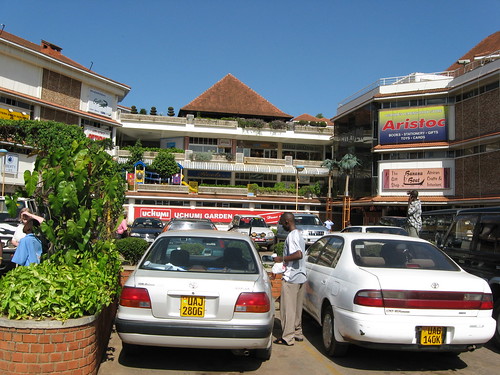 Garden City Mall in Kampala
courtesy of farm3's flickrstream
In the three years I've been traveling to Uganda, I've only ventured into the Garden City Cineplex once, to see Vantage Point with Steve last April. Being as that I'm a Butvin, movie-going runs deep in my blood. Trips home to Strongsville are not complete without at least one dinner-and-a-movie combo - not to mention the scores of flicks we watch out at the cottage on rainy summer days. I always forget how much I love the experience until I'm watching the previews. At which point I get so excited that I forget you also get to see a full-length feature film after the previews are done!
After a hot hot hot afternoon walking around the various tents at the Europe-Uganda Village on Saturday, we decided to see a matinee - Duplicity. Popcorn, spies, love and air conditioning - perfect.
So perfect, in fact, that today, after an extended brunch at Emin Pasha, we decided to hit up the Cineplex again - this time for X-Men Origins: Wolverine. We stopped at the new Nakumatt that opened up at Oasis Mall, spending a very American sum ($10) on a Snickers ice cream bar, gummy bears and one very small bag of peanut M&Ms. It felt just like home.
Two Hugh-filled hours later, we reconvened in the food court. Yes, the food court. This was the weekend of the American teenager. I'm full of gummy bears, paneer wrap and pop culture. Life is good.
Tuesday, April 28, 2009
pollan fever
I love Alain de Botton. Travel, love, status anxiety, physical space - he wraps it all up in an artsy philosophical package that you just can't wait to tear open.
Michael Pollan has done the same thing for the tangible world, totally re-shaping the way we look at food - and writing about it in that page-turning way only Pollan can do.
 pollan's writing house
While perusing the used bookshops in Melville last month, I came across A Place of My Own, Pollan's treatise on personal architecture. Written after finishing renovation of his own home and upon entering into fatherhood, the book winds elegantly between construction handbook and the individual's need for personal space.
 my writing house?
When I was growing up, I had a little hideaway under the basement stairs. My dad creeped me out by telling me it was because it was only 8 years earlier that I was just a little seed in my mom's womb. Twenty years, later, it makes sense, but the desire to have a "place of my own" has never subsided. Pollan's place is a shingled writing shack in the woods near his home. I've visualized a whole range of my own places, from one of those prefab houses dropped on a plot in rural West Virginia, to a house on stilts in Belize with zero decoration - just warm wood tones and sea breezes. Or a Bon Iver-ish dark cabin in the woods with a hearth and blankets of snow outside.
Pollan's descriptions totally hit home - from my own dreams about place to his education on architecture. The book traipses from framing to Le Corbusier, from roofing to Frank Lloyd Wright, and from site selection to Peter Eisenman (eek! I still hate him!). Ultimately, he brings it back to architecture as shelter, and the very personal architecture of creating a space that suits who we are. Bravo.
Michael Pollan has done the same thing for the tangible world, totally re-shaping the way we look at food - and writing about it in that page-turning way only Pollan can do.
pollan's writing housemy writing house?Pollan's descriptions totally hit home - from my own dreams about place to his education on architecture. The book traipses from framing to Le Corbusier, from roofing to Frank Lloyd Wright, and from site selection to Peter Eisenman (eek! I still hate him!). Ultimately, he brings it back to architecture as shelter, and the very personal architecture of creating a space that suits who we are. Bravo.
Saturday, April 18, 2009
jumping ship - with both feet
 go for it, and don't look back
It's been about a year since my friend Ivan gave me the book The 4-Hour Work Week. It took me a few months to not feel silly reading it - a business self-help book of sorts with a gilded guy in a hammock on the front. When I finally did pick it up (after removing the jacket), I hid myself away for a few days and emerged with a fresh perspective on life. The impact the book had on me cannot be exaggerated. Of course it provided valuable lessons for One Mango Tree - finding a good fulfillment service, outsourcing anything and everything you can, being comfortable with delegating. But bigger than that, I realized there were other people out there like me - people who felt completely stifled and discouraged by the 9-to-5 career existence.
There is another way to live.
When I left DC, I intended to stay with the day job I've had since moving there in 2005. All fall I'd been experimenting with working remote, and started taking Fridays off to work on my business. I'd convinced myself it was the office environment, not the work itself, that was killing me. Once I got to Uganda, I continued the remote work thing; checking in, doing my reports, trying to make the conference calls work. And then, suddenly, One Mango Tree really started working. And I started teaching yoga. And I realized how little it really costs to have a great life in Uganda.
And so on Friday, I took the leap. I quit AIR.
I dove in head first. And let me tell you - the water feels really damn good.
Thursday, April 16, 2009
on teaching

photo credits joe shymanski
When I was finishing up the "apprenticeship" component of my yoga teaching training last year, I had to teach parts of a few private group classes in my mentor Judy's home in Woodley Park. I'd head off on the Surly in the early summer light; the anxiety and the bike ride making me feel very much alive. Judy didn't like to prep me too much before the classes - she'd be teaching and then say, "and now Halle will lead us through balancing postures." At which point my brain would start to sift and scroll through sanskrit and posture nicknames. No matter how much my nerves would cause me to sweat and shake, I always left class feeling totally invigorated.
I moved to Uganda with the full intention of teaching yoga at Kevin and Gavin's studio in Munyonyo, but it took me almost two full months to finally accept an invite to teach. I'd just returned from South Africa, and Kevin suggested that I sub their Sunday morning class. I laughed nervously and then accepted. At 2:30 am on Sunday morning I was still burning incense and perfecting my playlist.
I love to practice yoga, but I'm coming to realize that I love teaching yoga in a completely different way. Much like giving and receiving gifts, there's something to be said for experiencing both sides of the equation. The giving part I like the most is svasana, when I can prance around the room with herbal eye pillows, adjusting all the students and giving them head massages. I love the squinty-eyed bliss that follows svasana after a class that really pushed you.
All in all, I really love teaching, and I'm truly enjoying being the newbie teacher in town.
Wednesday, April 08, 2009
the things i carried
You can't get fresh asparagus in Kampala. As Hitesh wrapped up his meetings at University of Pretoria, I spent a lovely morning wandering the beautiful aisles of Woolworth's Foods. After much pacing, I picked up two packs of asparagus. A stop at Pick-and-Pay for Ouma Rusks and a couple of bags of biltong at a local vendor rounded out my shopping trip. I tried my first rusk at Ginnegaap, curiously dipped it into my coffee...and fell in love. I then proceeded to DEVOUR the muesli rusks at Mosetlha, at one point eating more than a dozen in one 24-hour period. At home in the US, I sometimes make tomato soup solely to dip my grilled cheese. After finishing my sandwich, I make sure no one is looking and pour the remaining soup down the drain. I found myself doing the same at Mosetlha, making just enough tea or coffee to submerge my rusk, and never even drinking the liquid.
Rusks and biltong evolved during South Africa's early pioneering days - a way to preserve bread and meat in the dry climate. Both were also used extensively during times of war, for people traveling long distances.
And so I traveled my long distance home, about four hours on South African Airways, from Johannesburg to Entebbe, keeping my fingers crossed that customs wouldn't find the little goodies hidden in my big red suitcase. Success!
I tried my first rusk at Ginnegaap, curiously dipped it into my coffee...and fell in love. I then proceeded to DEVOUR the muesli rusks at Mosetlha, at one point eating more than a dozen in one 24-hour period. At home in the US, I sometimes make tomato soup solely to dip my grilled cheese. After finishing my sandwich, I make sure no one is looking and pour the remaining soup down the drain. I found myself doing the same at Mosetlha, making just enough tea or coffee to submerge my rusk, and never even drinking the liquid.Rusks and biltong evolved during South Africa's early pioneering days - a way to preserve bread and meat in the dry climate. Both were also used extensively during times of war, for people traveling long distances.
And so I traveled my long distance home, about four hours on South African Airways, from Johannesburg to Entebbe, keeping my fingers crossed that customs wouldn't find the little goodies hidden in my big red suitcase. Success!
Tuesday, April 07, 2009
on the road in south africa
 sunset on a walking safari with chris, owner of mosetlha bush camp
I first met Hitesh back in 2007, after having a few phone calls when a friend put us in touch to talk about conservation issues in Kenya. He'd already started writing his forthcoming book, Authentic Ecolodges, and our paths crossed one evening in Kampala as he was wrapping up visits to an ecolodge in Zanzibar. Hitesh is a Kenyan citizen, and a trained architect and landscape architect, with all the fervor of an avid environmentalist. He's the world's leading expert on ecolodges, and walks the walk more than anyone I've ever met. I've always been interested in ecotourism, more as a tourist than anything else, but this time our crossing paths was more strategic than originally intended.
The Ohio State architecture program kicked off its spring Uganda studio at the same time Hitesh and I were traversing the South African landscape. 14 students began researching building materials, climate issues and culture in northern Uganda, in the attempts to collaborate with One Mango Tree tailors to design a green, off-the-grid production facility. Over our four days in Madikwe, Hitesh and I discussed community ownership models (visiting Buffalo Ridge, an ecolodge in the reserve fully-owned by the local community), ventilation improved pit toilets, water-heating methods, alternative energy models, and site planning. Who knew that an ecolodge, meant for a traveler's enjoyment, could so fully inform the design of a production facility? We stayed at Mosetlha Bush Camp, a fine example of how people can (and do) coexist with ecosystems without destroying them. I can't wait for Hitesh to share his insight and experiences in East Africa with the Ohio State students.
On our way back to Jo'burg we got a bit lost in the yellow hills so close to Botswana, listening to Habib Koite and planning our next journey. At OR Tambo the next morning, Hitesh headed off to a full moon-lit massage at an ecolodge in Namibia, and I back to Kampala. Home.
Saturday, April 04, 2009
this should be in a museum!
 one of the pillars of the new constitution outside the apartheid museum
As I was finishing Yunus's Creating a World Without Poverty, I remember him dwelling (for a few pages) on the concept of poverty museums. Museums are for remembering - pieces of our culture, pieces of things that make up the history of man. Just as much as that big, golden cross belongs in a museum, argues Yunus, so do the social ills that plague society. On my recent travels in Africa, I've visited three museums - none of which commemorate culture or art.
Kigali Genocide Memorial Center - Kigali, Rwanda
The Hector Pieterson Museum - Orlando West, Soweto, South Africa
Apartheid Museum - Johannesburg, South Africa
Perhaps in creating a beautiful space to commemorate the horrific things we've done to each other, that violence and hatred can be a thing of the past. After reading through the history and seeing the exhibits about Apartheid's creation and demise, I sat down in the veld and realized that there is a piece of me missing. I cannot fathom hatred. This has been bugging me lately - first when I was in Rwanda, and now in South Africa.
I at first thought Yunus's proposition of a "poverty museum" a bit laughable, but I'm coming around on the concept. Surely the phrase "never again" must have a broader breadth than genocide alone.
Friday, April 03, 2009
where to stay in jo'burg: melville
Ever an urban planner, I'm always drawn to walkable cities, vibrant street life, cafes that induce people-watching. When I heard that I'd definitely need to rent a car to get around in Jo'burg, I was bummed. Then a friend recommended that I stay in Melville - a few blocks of cafes, bookshops, boutiques and bohemia in a suburban area on the outskirts of the city. It did not disappoint, starting with where I stayed. Ginnegaap Guest House is adorable, with wood floors, beige walls, white trim and pressed ceilings, framed black and white photos, simple white down comforters, rain shower head in the bathroom. The dollar is really strong in SA right now, so four nights at Ginnegaap only set me back $150. Upon arriving, I announced that I would not be leaving the confined of the cute guest room and adjoining patio. But then I would have missed:

A visit to Audrey at Bookdealers, a second-hand bookshop on 7th - where I spent over an hour selecting titles, finally settling on four (for a grand total of less than $15):
Siddharta by Herman Hesse
The Consolations of Philosophy by Alain de Botton
Snakepit by Moses Isegawa
A Place of My Own by Micheal Pollan

Dinner at Cafe Picobella, with delicious wine less than $2 per [huge] glass and some amazing things done with butternut, including a butternut and sage lasagna.
Dinner at Cafe Mezzaluna, on their adorable garden patio, with more delicious wine and apricot chicken with couscous.
And when feeling adventurous, call up Maxi Taxi and discover the hideout of all the white South African hippies at the Bryanston Organic Market every Thursday and Sunday. Smells like nag champa, sounds like flautists, and [the best part] tastes like savory crepes with roasted veggies and pumpkin seeds, plus an almond polenta cake. Definitely worth a visit for the crowd and the food.

A visit to Audrey at Bookdealers, a second-hand bookshop on 7th - where I spent over an hour selecting titles, finally settling on four (for a grand total of less than $15):
Siddharta by Herman Hesse
The Consolations of Philosophy by Alain de Botton
Snakepit by Moses Isegawa
A Place of My Own by Micheal Pollan

Dinner at Cafe Picobella, with delicious wine less than $2 per [huge] glass and some amazing things done with butternut, including a butternut and sage lasagna.
Dinner at Cafe Mezzaluna, on their adorable garden patio, with more delicious wine and apricot chicken with couscous.
And when feeling adventurous, call up Maxi Taxi and discover the hideout of all the white South African hippies at the Bryanston Organic Market every Thursday and Sunday. Smells like nag champa, sounds like flautists, and [the best part] tastes like savory crepes with roasted veggies and pumpkin seeds, plus an almond polenta cake. Definitely worth a visit for the crowd and the food.
Thursday, April 02, 2009
the psychology of fear

juxtaposition in jo'burg, hot coffee and hot fence
Jo'burg has somehow become synonymous with violent crime. I'd envisioned a dark, gray, concrete city - something akin to City of God. In complete contrast to this, I arrived in Jo'burg on the first days of autumn, and quickly noticed how green the place is. There are trees everywhere. I met my friend Stephanie at the airport, and we took a cab to Ginnegaap Guest House in Melville, an area recommended by a South African friend. As we drove through the city and surrounding suburbs, everything looked so familiar that my mind kept racing, trying to place the landscape and architecture with places I've been in the United States and Europe.
I was struck by many things in South Africa, but more than anything I was confused by the whole concept of fear. Flying into OR Tambo Airport, the suburbs of Jo'burg looked a bit like Beverly Hills from the sky - huge mansions with pools and rolling acreage - but you can't miss the thin outline of a wall around every residence. The city is filled with gorgeous architecture and landscape, but the majority of it is well-hidden behind tall walls with electrical fencing across the top. Ginnegaap itself is an urban oasis, nestled behind a clay-colored wall. Our key ring had no less than 8 keys, and when we came in at night, we used all 8 to un-lock the gates that lie between the 4th Avenue and our room. On the first night we stayed in past dark, only to realize that the place had been locked down. While we were eager to explore the area, the many gates convinced us that maybe it wasn't the safest thing to do.
On driving through the city center days later, I saw the concrete and gray city that I'd envisioned. The fear in South Africa makes sense when you combine the still-present (though not forced) segregation and xenophobia. The city center houses much of the unemployed population, which looks like a lot of Nigerian men loitering on street corners. Unemployment is at 30% in SA. This, in contrast to the jacaranda-lined streets of Houghton, where Nelson Mandela now resides; the incredibly smooth and modern highways that criss-cross the nation; the beautiful golf courses; the strip malls that line the suburban roads.
We visited Soweto, and even there I was surprised to find such a developed area. The separation was the more appalling piece, and the fact that the race lines are still so clearly drawn in where people live. One night at dinner, Steph and I talked to two South African men. They shared the story of their recent adventure into Soweto. They'd befriended a black South African woman, who invited them to a restaurant in Soweto. The recalled the intense fear they'd felt as they drove into the area, and how they'd so much enjoyed the food and atmosphere in the restaurant. When we asked if they'd ever go back, their response:
"No. No way."
Tuesday, March 31, 2009
and more cotton
I'm getting used to this 24-hour turnaround in Kampala. After the long journey back from Gulu on Sunday, I had one day in town before my 4:30 am drive to the airport, setting off for Jo'burg.
The one day back in town was broken down into tightly-packed hours and minutes, starting with a morning meeting with Phenix. We toured their factory in Kampala, which looked exactly like UTEXRWA. Phenix gets its 100% organic cotton from farmers in Lira, northern Uganda. The factory was filled with the same big green Swiss machines, spinning the raw cotton into yarn. The difference between the two companies is in the processing. UTEXRWA weaves cotton, while Phenix knits it. What's the difference? With UTEXRWA you get wax-print, woven fabrics. With Phenix you get t-shirts. Turns out Phenix is the supplier of all the organic cotton yarn used for EDUN Live - the clothing company started by Bono and his wife, Ali Hewson. I'll let you use your imagination as to the outcome of our meeting.
On to Jo'burg!
The one day back in town was broken down into tightly-packed hours and minutes, starting with a morning meeting with Phenix. We toured their factory in Kampala, which looked exactly like UTEXRWA. Phenix gets its 100% organic cotton from farmers in Lira, northern Uganda. The factory was filled with the same big green Swiss machines, spinning the raw cotton into yarn. The difference between the two companies is in the processing. UTEXRWA weaves cotton, while Phenix knits it. What's the difference? With UTEXRWA you get wax-print, woven fabrics. With Phenix you get t-shirts. Turns out Phenix is the supplier of all the organic cotton yarn used for EDUN Live - the clothing company started by Bono and his wife, Ali Hewson. I'll let you use your imagination as to the outcome of our meeting.
On to Jo'burg!
Monday, March 30, 2009
of tsetse flies and brake failure

I spent much of the past week with Tim, the owner of Greater Good, and One Mango Tree's biggest buyer. After two days with the ladies in Gulu, we decided to take an on-the-way-home safari at Murchison with Noela and Medi, our driver. Gulu is about a two-hour drive from the north gate of the park - on a really nice tarmac road that runs from just north of Karuma Falls out to Pakwach. In 2007, I stopped in Pakwach on a reverse trip (heading to Gulu after a safari in the park). The town must see its fair share of tourists, as it's completely packed with men selling handicrafts - little drums and funny carved men with spears balancing on a pedestal. We stopped for breakfast (roll-ex and tea), and proceeded through the north gate, treating ourselves to a self-guided game drive on the only road that goes to Paraa Lodge - where we were meeting park ranger Nelson and his boat.
 Elephants road-side during our self-guided game drive
 Me and Medi, our awesome driver, at the base of Murchison
Then, not long after the attack subsided, we lost our brakes. Noela and Tim were blissfully passed out in the back seat, and Medi calmly showed me when he pressed the brakes that nothing at all happened to slow the car. I was mildly freaked out, but Medi illustrated such calm that I decided to roll with it. Literally. We drove brake-less for one hour, until we finally arrived in Masindi (honking at pedestrians as we rolled through town). Medi finally threw the car into reverse in front of a garage and we came to a jolting halt. I must say, only in Uganda can you blow out both brakes, roll to a garage and have them repaired in under an hour on a Sunday, and for only $10. It was barely an annoyance, and gave me time to drink a bag of yogurt, eat some glucose biscuits and read about ritual murder and devil worship on the front page of the New Vision.
Sunday, March 29, 2009
acel, aryo, adek, angwen (1, 2, 3, 4!)

Havana Pub celebrated the fourth anniversary of its opening in Gulu on Saturday night. I'm not one for the bar scene in Gulu, but I've definitely had my fair share of Havana experiences. Early in 2007 it was bending bottle caps during happy hour, drinking Bell and falling for a much, much younger guy. Later that year it was hearing gunshots from the balcony of Kakanyero and learning that a UPDF soldier had shot himself in the head just inside the bar.
Now, in 2009, with Club beer apparently buying every piece of advertising space they could get their hands on, Havana celebrated its anniversary by closing off the street for a night of musical debauchery. Between two rigged walls of blue plastic tarpaulin, the Hotel Pearl Afrique Band filled the air with jazzy Antibalas-like tunes. The lead singer announced that they were "going traditional," switching into the familiar beats from all those bus rides from K'la to Acholiland - with live dancing. In black t-shirts, jeans and NY Yankees caps, the guys came out and performed what can only be described as a crotch-thrust, where the upper body stays totally still and the lower body, well....hips thrust, knees wobble. I was smiling and laughing so hard my face hurt.
The MC and DJ gave lots of shout outs to northern Uganda, and as I looked around at the growing mass of smartly-dressed young Ugandans at the show, I couldn't help but think of how much this place has changed since I first came in 2006. I went back to Jojo's after the hotel band wrapped up, but when I left for K'la the next morning at 6 am, the music was still going strong.
Friday, March 27, 2009
friday night hafiz
the small man
builds cages for everyone
he knows.
while the sage
who has to duck his head
when the moon is low
keeps dropping keys all night long
for the
beautiful
rowdy
prisoners.
- hafiz
builds cages for everyone
he knows.
while the sage
who has to duck his head
when the moon is low
keeps dropping keys all night long
for the
beautiful
rowdy
prisoners.
- hafiz
Wednesday, March 25, 2009
cotton & cooperatives - digging deeper
One of our One Mango Tree customers is in town visiting the cooperatives he buys from in East Africa, so I ended up spending much of the week going on his site visits with him - first to Gahaya Links (they partner with Fair Winds Trading to supply all those baskets to Macy's - and pretty much any African-made product you see at Starbucks) and then to Partners in Health (PIH) in Rwinkwavu.

In between, I spent yesterday morning at UTEXRWA - a textile factory located in Kigali. The factory is a shining example of Rwandan industry, with a spotless facility and remarkable openness about their processes. I learned about fabric production in its entirety, starting with raw cotton from ginneries in Uganda, Tanzania and Burundi:
-- from cleaning - to spinning - to weaving - to processing - to printing - to packing --

I saw how they make 50/50 poly blend (mixing in equal parts natural cotton and the blindingly white poly made in Korea and imported), and watched women in the weaving department hand-hook the fabric patterns before sending them off to the automated weavers. Into the processing department, where all those chemical baths reside - hopefully we can avoid this room with One Mango Tree's fabrics.
Then on to the printing, where they have thousands of designs etched into huge metal cylinders. I found the ones used for Obamabags (recognize the face in the image below?) - that's right, they too are a production of Fair Winds and UTEXRWA. The Obama print is off-limits.

The whole process is impressive and incredible - and a challenge to explain, particularly the spinning department, where cotton turns from fluff into longer and stronger threads. The end result? We get to choose from thousands of designs and weights, which means One Mango Tree products are about to get that much cooler - we're aiming for 100% organic - and our bags will finally be 100% East African, a combo of Uganda, Rwanda, Tanzania and Burundi - from soil to sale.
Check out some potential new prints here.

In between, I spent yesterday morning at UTEXRWA - a textile factory located in Kigali. The factory is a shining example of Rwandan industry, with a spotless facility and remarkable openness about their processes. I learned about fabric production in its entirety, starting with raw cotton from ginneries in Uganda, Tanzania and Burundi:
-- from cleaning - to spinning - to weaving - to processing - to printing - to packing --

I saw how they make 50/50 poly blend (mixing in equal parts natural cotton and the blindingly white poly made in Korea and imported), and watched women in the weaving department hand-hook the fabric patterns before sending them off to the automated weavers. Into the processing department, where all those chemical baths reside - hopefully we can avoid this room with One Mango Tree's fabrics.
Then on to the printing, where they have thousands of designs etched into huge metal cylinders. I found the ones used for Obamabags (recognize the face in the image below?) - that's right, they too are a production of Fair Winds and UTEXRWA. The Obama print is off-limits.

The whole process is impressive and incredible - and a challenge to explain, particularly the spinning department, where cotton turns from fluff into longer and stronger threads. The end result? We get to choose from thousands of designs and weights, which means One Mango Tree products are about to get that much cooler - we're aiming for 100% organic - and our bags will finally be 100% East African, a combo of Uganda, Rwanda, Tanzania and Burundi - from soil to sale.
Check out some potential new prints here.
Sunday, March 22, 2009
omnivorific, or julie carney-copia
 Showing off some shiny eggplant at one of the GHI gardens
Julie is IN it. She lives, breathes, and sleeps (and obviously eats) sustainable agriculture. We visited the GHI model farm, which occupies what used to be the backyard in the compound that houses their office. Julie convinced the landlord to tear up the turf and ornamental trees, and they now have a thriving example of a home garden: eggplant, cabbages, pepper, tomato, amaranth, onions, carrots, spinach, and sweet potatoes, along with a tiny tree farm of tamarillo (tree tomatoes), mango, and moringa. GHI uses lots of innovative gardening techniques, since all of their cooperatives live in a peri-urban area and do not have the space normally required for a garden. My favorite is the sack garden.
So, understandably, the underlying theme of our stay in Kigali has been food. We're eating carrot-zucchini muffins, lots of wheatberry, fruit salad topped with tamarillo, loads of fresh veggies. On our hiking trip to Ruhengeri this weekend, Julie tried out her latest iteration of a power bar - a mix of moringa, honey, peanuts and some left over dried fruit she found in my backpack.
All of this food and farming is probably the reason I wasn't too surprised when I opened the Sunday NYTimes email to read that the Obamas are tearing out a piece of the South Lawn to build an organic garden at the White House, something Michael Pollan suggested in a New York Times op-ed back in 1991. Granted, Pollan offered a garden as one of several alternatives - a symbolic gesture for removing the chemical-loving non-native turf that so often symbolizes domestic American life. Either way, to me this is illustrative of a priority shift. I've been reading a lot about food and farming in the past year, and am elated to see that Michelle Obama is embracing food issues. What impresses me most is that this so-called food revolution crosses the divide. Whether improving nutrition for people living with HIV in Rwanda, or decreasing obesity in the United States, the spotlight is on how we, as humans, eat.
And, thanks to the happy combination of Julie's cooking and Rwanda's fertile soils, I'm eating quite well.
Friday, March 20, 2009
italian african fusion - mango caprese
 photo from closetcooking.blogspot.com
slice up a ripe mango
slice up fresh milk mozzarella cheese
layer with fresh basil
drizzle with balsamic vinegar and olive oil
I encountered this awesome variation on the traditional caprese at torero cafe, kigali, rwanda.
Subscribe to:
Posts (Atom)